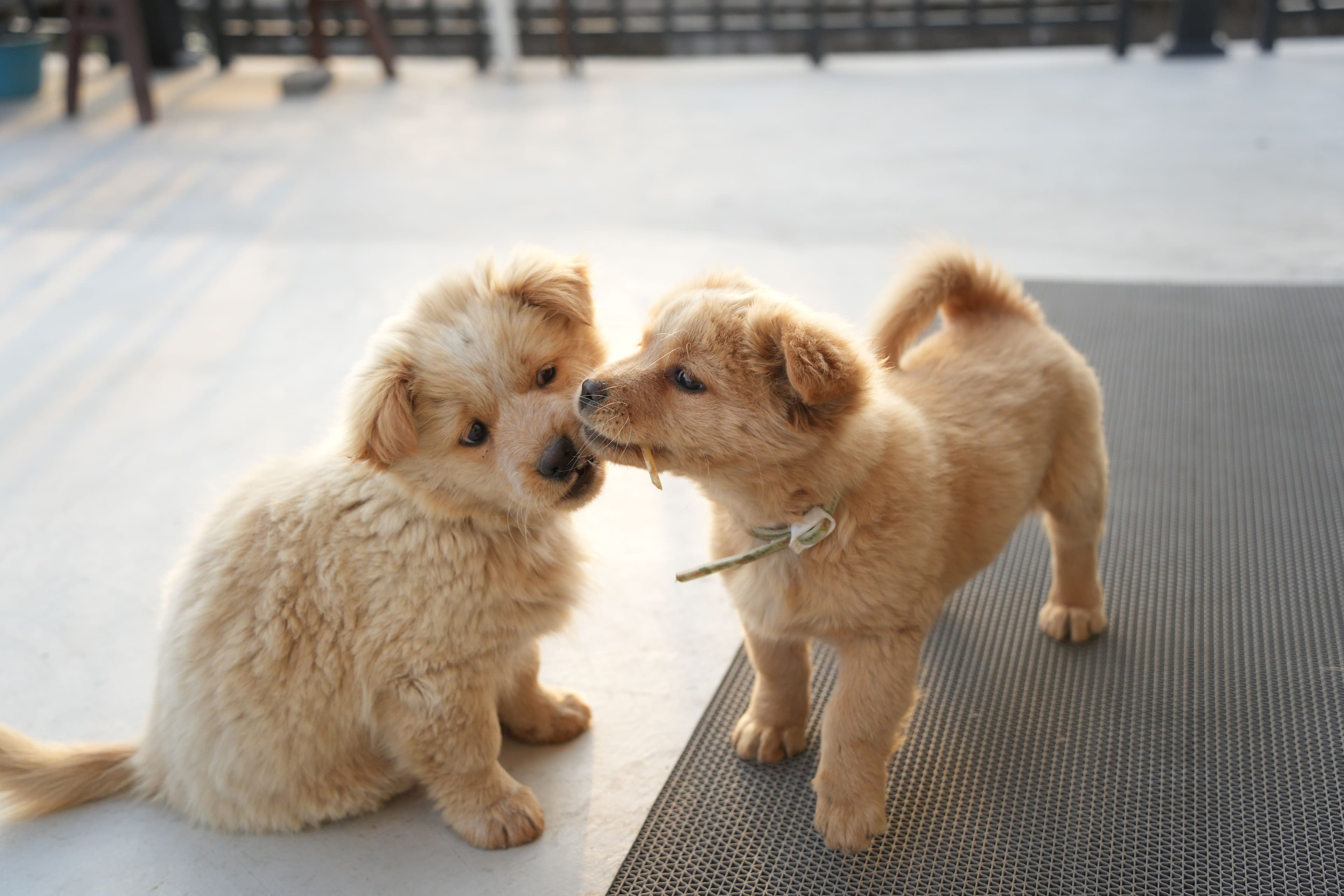
There is nothing quite like bringing a new puppy home, the memory of this makes me want to do it all over again. The soft fur, the clumsy paws, that unmistakable puppy smell—it’s pure magic. But alongside all that cuteness comes a whirlwind of behaviour. One minute they’re sleeping like an angel, and the next they’re chewing on your favourite shoes, digging up a houseplant, or treating your ankles like a chew toy.
It’s easy to look at a puppy and think they’re just being mischievous. But the truth is much more fascinating: puppies are little learning machines. From the second they open their eyes, their brains are furiously downloading data about how the world works.
If you want to raise a confident, well-behaved adult dog, you need to understand how that tiny puppy brain processes information.
1. The Critical Window: The Puppy Socialisation Phase
Between the ages of 3 and 16 weeks, a puppy goes through a critical developmental stage called the socialisation window. During this time, their brains are incredibly flexible. They are learning to categorise the world into two distinct columns: Safe and Dangerous.
How it works: If a puppy has a positive encounter, their brain files it under "Safe/Normal."
The Catch: If they don't encounter these things—or if the encounter is scary—their brain naturally defaults to fearing them later in life.
Learning at this stage isn't about teaching obedience; it's about teaching optimism.
2. Association: The "Cause and Effect" Engine
Puppies are brilliant scientists. They are constantly running experiments to see what happens next. They learn almost entirely through classical and operant conditioning—or, in puppy terms: Association and Consequences.
They associate their actions directly with the immediate result.
The 1-Second Rule: Puppies live entirely in the present moment. A consequence (good or bad) must happen within one second of the behaviour for the puppy to connect the two. If your puppy pees on the rug, and you find it 20 minutes later and scold them, they don’t learn "don't pee on the rug." They learn "sometimes my human yells at me for no reason."
The Power of Positive Reinforcement
Because puppies repeat behaviours that get them good things, you can use this to your advantage.
Puppy sits, gets a piece of hot dog. Brain says: "Let's do that again!"
Puppy barks at you, you turn around and ignore them. Brain says: "Well, that didn't work."
3. How They Learn "Bad" Habits (By Accident!)
Puppies don't have a concept of human morality; they don't know what is "right" or "wrong." They only know what is rewarding (self-reinforcing). Often, we accidentally teach them the exact behaviours we hate.
If they bark at you and you look at them and say "Stop it!", they just learned that barking gets you to look at them - attention is a reward—even if it's negative attention. This therefore reinforces the behaviour
4. Observation and Exploration (The Sensory Approach)
Puppies don't have hands, so they explore the world with their mouths and their noses. When a puppy bites your hand, pulls the stuffing out of a toy, or shreds a toilet paper roll, they aren't trying to be destructive. They are actively learning about textures, physics, and boundaries.
They also learn heavily through environmental observation. They watch your body language, the reactions of older dogs in the house, and your tone of voice to gauge whether a situation is safe or stressful.
The Puppy Learning Matrix: What Works vs. What Fails
What Works | Why It Works | What Fails | Why It Fails |
High-value rewards | Keeps their short attention span locked on you. | Long training sessions (Over 10 mins) | Their brains tire out quickly, leading to frustration. |
Capturing good behaviour (Rewarding them when they choose to lie down quietly) | Teaches them that calm behaviour pays off. | Physical punishment (Pushing them down, yelling) | Teaches the puppy to fear you, destroying trust. |
Consistency (Everyone in the house uses the same cues) | Prevents confusion and speeds up the learning curve. | Assuming they "know better" | Expecting an animal to understand human rules without clear training. |
3 Keys to Unlocking Your Puppy’s Potential
Now that you know how they think, here is how to maximise their learning:
1. Keep it Short and Sweet
A puppy's attention span is about the size of a single piece of kibble. Keep training sessions to 2 to 5 minutes, a few times a day. Always end on a successful, happy note while they still want more!
2. Manage the Environment
If you don't want your puppy to learn that chewing shoes is fun, don't leave shoes on the floor. Set them up for success by puppy-proofing. If they can only access their own chew toys, they will learn to love their chew toys.
3. Be Patient
Your puppy is a baby of a completely different species trying to learn how to live in a human world. Their brains are still physically growing. Mistakes will happen, but with clear boundaries, heaps of treats, and consistent kindness, they will get it.
What we can offer:
Our puppy socialisation sessions allow your pup the opportunity to observe and learn positive experiences and behaviours from other pups. We have lots of toys to explore textures and smells as well as understand that being in new environments is fun and exciting.
Every other Saturday at 10am.